

Introduction
Picture this. You walk up to your front door after a long day. You tap your smart lock’s keypad, hear that soft click, and feel your body relax. A few minutes later, you head to your car. You press a button on your key fob, the lights flash, and you feel safe again.
Both moments feel simple and comforting. But underneath that calm feeling is a whole world of technology working hard to protect you. That tech also comes with risks many people don’t think about.
In this guide, we’ll compare smart locks and keyless car entry systems. Even though they’re used in different places, they face many of the same security problems. By the end, you’ll know what both systems can teach you about staying safe, staying smart, and choosing the right device for your home.
Smart Locks: What Makes Them Smart?
Smart Locks Overview
A smart lock is basically a regular lock with extra brains. Instead of relying only on a key, you can unlock it in different, easier ways.
Types of Smart Locks
- Deadbolt smart locks
Replace your deadbolt completely. Common on front doors. - Lever smart locks
Mostly for inside doors like offices and bedrooms. - Retrofit smart locks
Sit on top of your existing lock and turn it for you. From outside, your door looks the same.
Smart Lock Features
Smart locks are built for convenience. Some popular features are:
- PIN codes
- Bluetooth unlock
- WiFi unlock
- Fingerprint (biometric) unlock
- Full app control to track activity and manage guest access
These features feel magical when everything works smoothly. No more standing at your door shaking your keys.
Smart Lock Security
Smart locks protect your home, so their security really matters. Here are key areas to pay attention to:
- Strong encryption to protect data
- Tamper alerts when someone tries to force the lock
- Firmware updates that fix bugs
- Hacking risks if passwords are weak or apps are outdated
- Mechanical override risks when locks still have keyholes
Smart Lock Reliability
Even smart devices have bad days. Common issues include:
- Battery dying
- Connectivity drops
- Sensors misreading your door position
- Weather damage for outdoor locks
When everything is set up well, though, smart locks can be very dependable.
Keyless Car Entry: Your Car’s Version of a Smart Lock
Keyless Car Entry Overview
Modern cars almost never rely on old-fashioned keys. Instead, they use wireless systems that talk to a key fob or smartphone.
Types of Car Entry Systems
- Key fob entry
- Passive keyless entry where the car unlocks as you approach
- NFC tap entry using a card or phone
- Smartphone-based entry through an app or digital car key
Keyless Car Entry Features
Car entry systems come with tons of helpful features:
- Remote unlock
- Push-start ignition
- Car locator
- Automatic proximity locking
These features make everyday life smoother, especially in bad weather or crowded parking lots.
Keyless Car Entry Security
Cars face serious security challenges:
- Relay attacks where thieves boost your fob’s signal
- Signal amplification attacks
- Key fob cloning on older systems
- Rolling code protection on newer systems
- Radio interference risks
Even though car security is strong, criminals always look for new tricks—so staying aware helps.
Keyless Car Entry Reliability
You may have seen these issues before:
- Fob battery draining
- Limited range
- Sensors acting up
- Weather messing with electronics
Cars deal with many of the same reliability problems smart locks do.
Security Lessons Learned From Both Systems
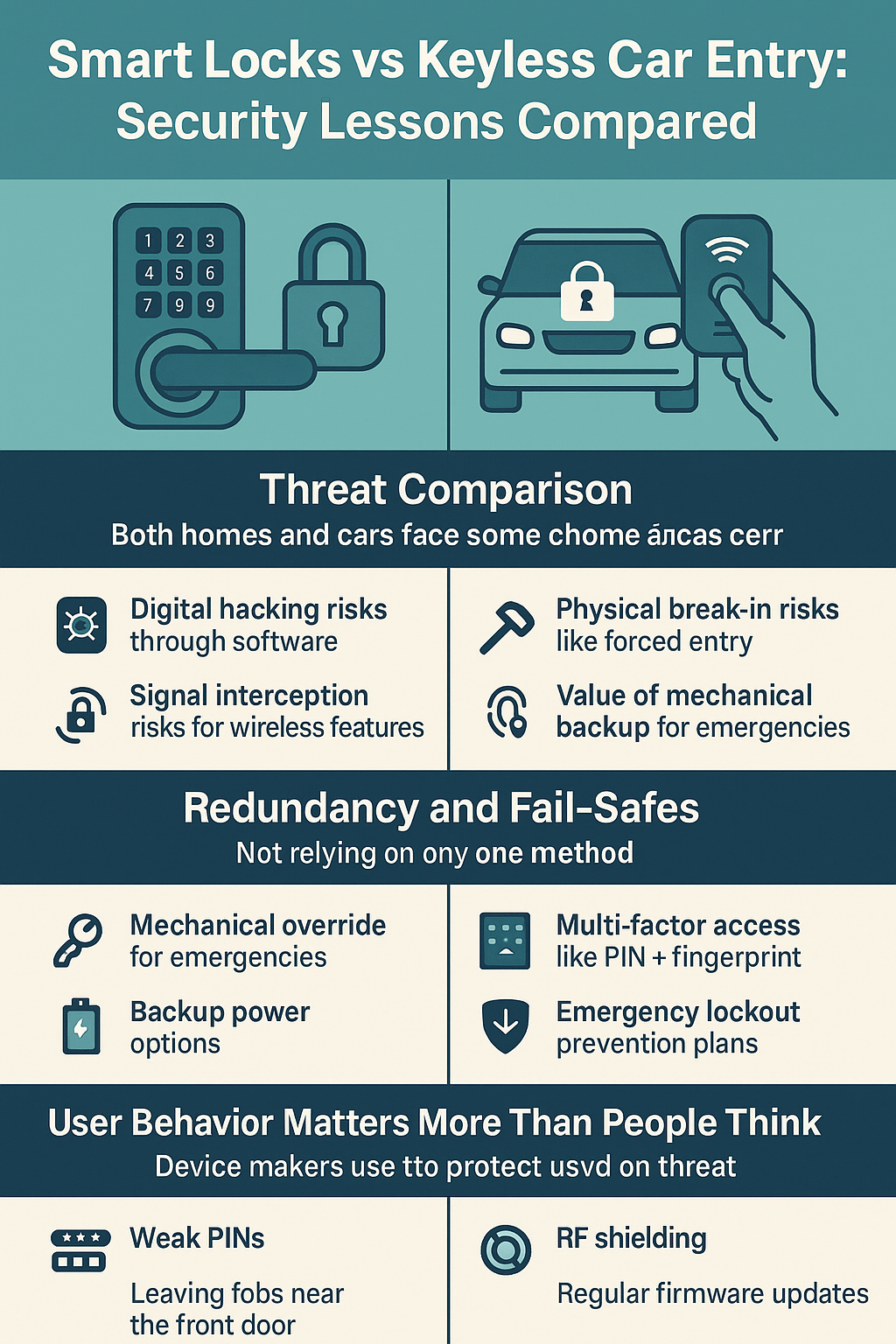
Threat Comparison
Both homes and cars face similar challenges:
- Digital hacking risks through software
- Physical break-in risks like forced entry
- Signal interception risks for wireless features
- Value of a mechanical backup for emergencies
Redundancy and Fail-Safes
The safest systems never rely on just one method.
- Mechanical override for emergencies
- Multi-factor access like PIN + fingerprint
- Backup power options
- Emergency lockout prevention plans
A little preparation goes a long way.
User Behavior Matters More Than People Think
Most security problems happen because of human mistakes, not because devices fail.
- Weak PINs
- Leaving fobs near the front door
- Reusing passwords
- Forgetting to remove old guest access
Simple habits can make your home or car much safer.
Industry Safeguards
Device makers also do their part by using:
- Strong encryption
- RF shielding
- Regular firmware updates
- Hardware tamper protection
But these protections only work well when you keep your system updated.
How to Choose the Right System
Choosing a Smart Lock
When picking a smart lock, think about:
- What level of home security you want
- Whether you need WiFi control or just local access
- How you feel about having a physical backup key
- Your budget
Pick a lock that matches your lifestyle, not just the flashiest one.
Choosing a Keyless Car Entry System
Focus on what matters for your car:
- Compatibility with your exact model
- Anti-relay security features
- Fob range
- Whether you prefer built-in (OEM) or aftermarket systems
A little research can protect you for years.
Troubleshooting Made Simple
Smart Lock Problems
- Replace batteries early
- Check for door misalignment
- Restart the app or reconnect your lock
- Fix or reposition sensors when needed
Keyless Car Entry Problems
- Move closer to the car
- Replace the fob battery
- Place the fob in the car’s backup detection spot
- Follow your manual’s reset steps
Most issues are easy fixes once you know what to look for.
Conclusion
Homes and cars both jumped into the world of wireless entry. Cars have been doing it longer, and their struggles teach us important lessons about smart lock security at home.
The best takeaway? Don’t rely on cool features alone. Strong habits, regular updates, and choosing devices with real security protections matter far more.
If you’re thinking about upgrading your home smart lock, treat it with the same seriousness you’d use when buying a safe car. Look at security, backup plans, and long-term reliability. Your peace of mind depends on it.